
I’ll be honest before Kenya, my idea of “wildlife” was the raccoons that knocked over my garbage cans every Thursday night. My cousin Sarah had been bugging me for two years about doing a safari. Two years! And I kept making excuses because who has time for that? Plus, Africa seemed so far away and expensive and… okay fine, I was scared.
But then 2025 hit differently. My job was draining me, my relationship ended, and I thought screw it if not now, when? Sarah nearly cried when I texted her “let’s do the Masai Mara thing.” Three months later, we were on a plane.
Day One: Welcome to Reality
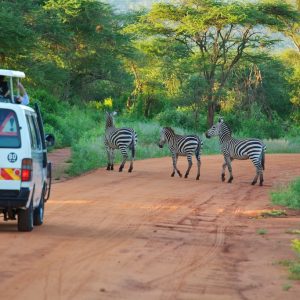
That first morning in the Maasai Mara National Reserve was rough. We’d flown into this tiny airstrip (seriously, I’ve seen bigger parking lots) and the heat was unreal. Like stepping into a hair dryer. Our guide was this guy named James—mid-40s, weathered face, eyes that didn’t miss anything.
“You ladies ready?” he asked, loading our bags into the most beat-up Land Cruiser I’d ever seen.
Sarah was practically vibrating with excitement. Me? I was wondering if my travel insurance covered wildlife attacks.
The drive to camp took maybe 20 minutes, and James kept stopping to point at stuff. “See there? Buffalo.” I saw grass. Just endless yellow grass and acacia trees scattered around like someone had planted them randomly. Then Sarah gasped and grabbed my shoulder so hard it hurt.
A lioness. Just laying there. Maybe 50 feet from our vehicle.
My brain couldn’t process it. This wasn’t a zoo lion looking bored behind glass—this was a wild predator who could absolutely murder us if she felt like it. Her eyes tracked us with this lazy interest, like she was deciding if we were worth the energy. Apparently not, because she yawned (teeth the size of my fingers) and looked away.
“Welcome to the Best of Masai Mara Wildlife Adventure,” James said, grinning at my shocked face.
That was 15 minutes into day one.
The Big Five Thing Everyone Obsesses Over
Before this trip, I’d never heard of the “Big Five Safari” thing. Turns out it’s lions, leopards, elephants, rhinos, and buffalo—the animals that were supposedly hardest to hunt back when people did terrible things. Now we hunt them with cameras, which seems way more civilized.
We saw lions constantly. Prides just hanging out, sleeping 20 hours a day like extremely dangerous house cats. Buffalo traveled in huge herds that blocked roads and didn’t care that we had places to be. Elephants showed up every single day—these massive, gentle creatures that made me emotional in ways I can’t really explain.
Rhinos were harder. There’s not many left because humans are the worst. But on day three, James radio-ed with another guide and we drove 40 minutes to see one. Just one black rhino, grazing peacefully, and I started crying. Sarah looked at me like I’d lost it, but something about seeing this endangered animal just existing hit me hard.
The leopard took until day four. They’re sneaky—prefer staying hidden, hunting at night, avoiding drama. When we finally spotted one (thanks to James’s ridiculous eyesight), it was lounging in a tree with a fresh kill. Just up there casually, tail hanging down, completely unbothered by the three safari vehicles watching.
What nobody tells you about the Best of Masai Mara Wildlife Adventure is that ticking off the Big Five doesn’t matter as much as you think. Yeah, it’s cool, but the moments that stuck with me were smaller—a baby elephant figuring out how to use its trunk, hyenas playing with their cubs, watching a secretary bird stomp a snake.
The Great Migration Broke My Brain
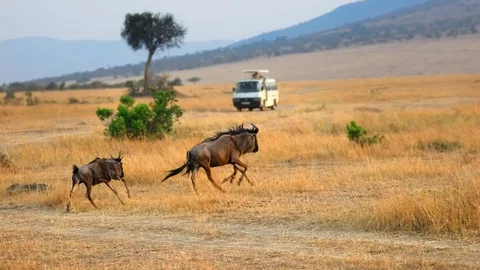
You’ve seen the documentaries. Millions of wildebeest and zebras moving from Tanzania’s Serengeti into Kenya, chasing rain and fresh grass. It looks dramatic on TV but being there in person? Completely different experience.
First off, it’s LOUD. Like standing next to a highway loud. Thousands of hooves hitting dirt, all those animals grunting and calling to each other, the sound just surrounds you. And the dust. Oh my god. I was blowing red dirt out of my nose for days.
The Mara River crossings though… that’s what everyone comes for. We got there around 8 AM and the riverbanks were packed with wildebeest. Just standing there. Waiting. Some would walk down to the water’s edge, look at it, and back up. This went on for TWO HOURS.
“Why don’t they just go?” I asked James.
“Crocodiles,” he pointed. And yeah, there were dozens of massive Mara River crocodiles just floating there, waiting for breakfast.
Finally, one wildebeest jumped in. Then chaos. Hundreds followed, bodies flying, water exploding everywhere, crocodiles lunging. It was violent and beautiful and terrifying. Most made it across. Some didn’t. That’s nature—brutal and honest in ways that made my comfortable American life feel very sheltered.
When is the best time to visit Masai Mara for wildlife? Everyone says July through October for migration, and they’re right. But James said every season has something special. We went in September, perfect timing for the river crossings.
Game Drives: My New Addiction
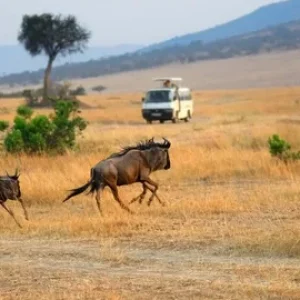
So game drives in Masai Mara happen twice daily—sunrise and late afternoon. Sarah was unbearable about morning drives, bouncing on my tent at 5:30 AM like an overexcited golden retriever. But even I (certified non-morning person) had to admit sunrise game drives were magical.
The grassland ecosystem of Masai Mara at dawn is something else. Everything’s purple and pink and gold. Birds start their racket (birdwatching in Masai Mara is seriously intense—there’s like 500 species). Prey animals emerge all nervous and twitchy. And the predators… they’re finishing up their night hunting before it gets too hot.
James could spot animals from impossible distances. We’d be driving and he’d suddenly stop. “Cheetah. Two o’clock. Behind that termite mound.”
I’d squint. Nothing.
Sarah would squint. Also nothing.
“Just trust me,” James would say, and sure enough, there’d be a cheetah laying in the grass watching gazelles.
One morning we watched a cheetah hunt. She stalked this gazelle for like 20 minutes, all slow and patient. Then exploded into a sprint—70 mph easy—and… missed. The gazelle zigged when the cheetah expected a zag. She just laid down after, panting, looking annoyed.
“Happens a lot,” James explained. “Cheetahs fail 80% of hunts. Takes a lot of energy.”
I felt bad for both of them honestly. The cheetah was starving and trying hard. The gazelle was just trying not to die. There’s no bad guys in nature—everyone’s doing their best.
Sunset and sunrise game drives each had different vibes. Mornings were active—hunting, movement, drama. Evenings were calmer, prettier. We’d park somewhere scenic and have sundowners while watching the sky show off. The colors here don’t seem real—like someone saturated them in Photoshop.
Where We Stayed (Tents, Hippos, and Questionable Wifi)
Accommodation in Masai Mara ranges from “I’m suffering for the experience” to “Is this even legal luxury?” We did mid-range because we’re not rich but also not interested in suffering.
Three nights in a tented camp near Naboisho Conservancy, two nights at a lodge in the main reserve. The tented camp was… an adjustment. When they said “tented,” I pictured actual camping. Nope. These safari lodges and tented camps are nothing like that. I had a real bed, private bathroom, hot shower, even wifi (barely functional, but it existed).
The walls were canvas though. Which means you hear EVERYTHING.
Including hippos.
First night, I woke up to this noise like a lawnmower mixed with a chainsaw right outside my tent. Hippos. Grazing. Did you know hippos leave the water at night to eat grass? I didn’t. They’re huge and surprisingly loud chewers and I was too terrified to look outside.
“Did you hear them?!” Sarah asked at breakfast, excited.
“Yeah, I thought I was gonna die.”
The conservancies adjacent to Masai Mara (Naboisho, Ol Kinyei, Mara Triangle) are honestly better than the main reserve for one reason: fewer vehicles. These conservation areas and conservancies limit how many safari trucks can watch an animal at once. So instead of 15 vehicles crowding a lion kill, it’s just you and maybe two others. Way better experience.
Best lodges in Masai Mara for wildlife viewing according to people we met: Mara Serena Lodge has incredible views but costs a fortune. Our tented camp (Kambu Mara something?) was perfect—close enough to nature to feel real, comfortable enough to not hate your life.
Private vs Group: The Money Question
We did a group safari because neither of us wanted to sell our kidneys. Private vs group safaris in Masai Mara basically comes down to budget and control.
Groups are cheaper—you split vehicle costs with 4-6 other people. But you’re on their schedule too. Our group had this couple who wanted to photograph every single bird. Every. Single. One. Which fine, you do you, but some of us wanted to find lions.
Private safaris let you dictate everything. Want to sit with sleeping lions for three hours? Weird, but okay. Want to skip the Maasai village visit? Your call. It’s just expensive.
How long should a Masai Mara safari last? Minimum three days. We did five and wished for more. James said some guests come for two weeks and still see new things daily. The Maasai Mara National Reserve is massive—1,510 square kilometers (I don’t know what that means in American but it’s big).
All The Animals (Because They’re All Incredible)
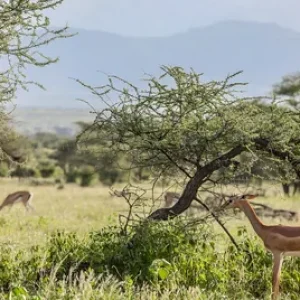
What wildlife can you see in Masai Mara? Easier to list what you CAN’T see. Beyond the Big Five, there’s cheetahs (fastest land animals, terrible at actual hunting), hyenas (unfairly hated—they’re smart and social), jackals, zebras, about 20 different antelope species I can’t keep straight, giraffes (how are they real), warthogs, and hundreds of bird species.
The wildebeest and zebras migrate together which apparently benefits both—zebras eat tall grass, wildebeest eat short grass, symbiosis or whatever. The impalas and gazelles are perpetually nervous because everything wants to eat them. Watching them is stressful.
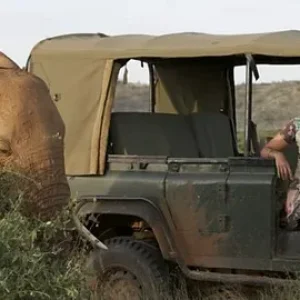
We saw elephants every day. Baby elephants are clumsy disasters that trip over their own trunks and need like eight adult elephants supervising them constantly. Watching elephant families interact made me rethink my own family dynamics—they’re so gentle and protective with each other.
Bird situation is wild. Eagles, vultures, secretary birds, rollers, bee-eaters, hornbills, and these little colorful ones James could identify instantly but I forgot immediately. The wildlife photography safari people were OBSESSED with the birds.
The Hot Air Balloon Situation
The hot air balloon safari Masai Mara experience is stupid expensive. Like really expensive. We almost skipped it because that money could pay rent, but Sarah pulled the “when will we be here again” card and I caved.
Worth it. Completely worth it.
You wake up at 4:30 AM (again!), drive to the launch site in the dark, and watch them inflate these enormous balloons. It’s freezing. I had three layers on and still shivered while everyone else seemed fine because I apparently packed wrong.
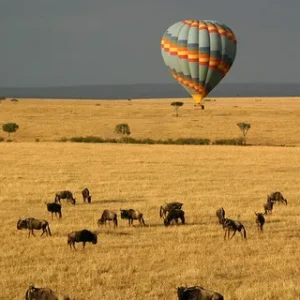
Then you’re floating. Silent except for occasional burner blasts. The sun comes up and the whole savannah plains turn golden. Below you—herds of buffalo, elephants, a lion pride on a fresh kill. The Mara River winding through landscape with hippos and crocodiles just chilling.
We landed in the middle of nowhere and there was a full champagne breakfast waiting. White tablecloths, real plates, eggs and bacon and pastries, while zebras grazed 50 feet away like this was normal. It felt absurdly fancy and perfect.
Maasai Culture: More Than Just Jumping
The Maasai culture and village visits can feel super touristy. Ours was… okay. The Maasai warriors did their jumping dance which is genuinely impressive—these guys jump higher than seems possible. They showed us fire-starting (tried it, failed instantly). The women demonstrated their intricate beadwork.
What made it real was talking with Daniel, a 22-year-old Maasai studying environmental science in Nairobi. He talked about the tension between traditional livestock herding and conservation. Lions kill cattle. Elephants destroy crops. His generation is trying to find balance between honoring tradition and protecting wildlife.
“Tourism pays better than cattle,” he explained. “But my grandfather doesn’t see it that way. Change is slow.”
That conversation stuck with me more than the dancing.
The Boring Planning Stuff (That You Actually Need)
Cost of Masai Mara safari packages varies wildly. We spent about $550 per person per day for mid-range accommodations, meals, game drives, and park fees. Budget options exist around $250-300 daily if you camp and do group tours. Luxury stuff runs $1,500+ easily.
What to pack for Masai Mara safari: neutral colors (beige, olive, brown—no bright stuff), layers (cold mornings, hot afternoons), good camera, binoculars, sunscreen SPF 50+, hat, bug spray, and realistic expectations for your appearance. The red dust gets EVERYWHERE. My hair looked terrible for five straight days. Nobody cared.
How to get to Masai Mara: fly from Nairobi (45 minutes, easy) or drive (5-6 hours on increasingly bad roads). We drove because we’re “budget conscious” (cheap). The last 90 minutes was basically off-roading. My spine hated me. Fly if possible.
Tour operators matter. We used one Sarah’s coworker recommended. Read reviews carefully—not just five-star ones. The three-star reviews tell you what actually goes wrong.
What is included in a Masai Mara safari package: verify EVERYTHING. Our “all-inclusive” package excluded park fees (expensive!), alcohol (expensive!), and tips (expected!). Ask specifically what’s covered.
Photography: Trial and Error (Mostly Error)
I’m not a photographer. My pre-trip Instagram was food pics and my cat Chester. But I learned some wildlife photography tips in Masai Mara through making every possible mistake:
Bring a real camera with zoom. Your phone won’t cut it unless you like photos of distant beige dots allegedly being lions.
Take hundreds of shots. Out of 1,847 photos, I kept maybe 60. That’s normal apparently.
Focus on eyes—James taught me this. Sharp eyes save even slightly blurry photos.
Put the camera down sometimes. I almost missed experiencing moments because I was too busy trying to capture them.
Golden hour (sunrise/sunset) gives beautiful warm light. Midday is harsh but can work for dramatic shadows if you know what you’re doing (I didn’t).
Safety: Please Don’t Be Stupid
Masai Mara safety tips for safari travelers from someone who almost learned them hard way:
Listen to your guide always. When James said “don’t lean out,” he meant it. A woman got scratched by a lion the week before because she wanted a better angle. The lion was playing. Those claws aren’t toys.
Animals have right of way. Period. We once waited 45 minutes for buffalo who decided not to move. We took another route.
Don’t stand in the vehicle. Fall risk plus becoming a predator snack.
Stay in your tent at night. Hippos kill more people than any African animal. They look goofy but they’re extremely dangerous.
Get vaccinated. Yellow fever, typhoid, malaria pills—everything. The mosquitoes here don’t mess around.
Questions People Keep Asking
What are the Best Masai Mara Wildlife Adventure experiences worth doing?
The Great Migration river crossings if timing works. Hot air balloon despite the cost. Sunrise game drives over sunset ones. Spending time in conservancies rather than just the main reserve. And honestly? The quiet moments between “exciting” stuff—watching the grassland ecosystem just exist, hearing lions roar at night, seeing the Milky Way without light pollution.
How much does a Masai Mara wildlife adventure cost realistically with everything?
Figure $500-800 per person daily for decent quality including accommodations, meals, game drives, park fees, and guides. Add flights, alcohol, tips, and extras like balloons. We spent about $4,500 each for the whole trip including international flights. Budget travelers can do $300-400 daily by camping and group tours. Luxury people spend $2,000+ daily without blinking.
When is genuinely the best time to visit Masai Mara for wildlife?
July-October for migration and river crossings. But January-March is underrated—calving season means baby animals everywhere and predators are well-fed so easier to spot. April-May can be rainy but it’s beautiful and empty. There’s honestly no terrible time if you’re flexible.
What should I actually pack that I wish someone had told me?
Better camera than I brought. Way more memory cards. Cash for tips (we ran out). Extra batteries for everything. Baby wipes (game changer). Real flashlight not phone. More warm layers for mornings. Lower expectations for staying clean. Also, less stuff overall—you wear the same three outfits anyway.
What This Trip Actually Changed
Nobody warns you how emotional it gets. I’m not a crier. But I cried watching the migration. Cried seeing that rhino. Cried during a sunset when the reality of where I was actually hit me.
The Best of Masai Mara Wildlife Adventure isn’t really an adventure like movies show adventures. It’s more like… a perspective shift? You realize these animals aren’t performing. They’re just living—hunting, eating, sleeping, mating, raising babies, dying. You’re just lucky enough to witness it.
You come back different. I notice birds in my neighborhood now. I donated to conservation groups. I became that annoying person who won’t shut up about their safari. Sarah’s already pricing return trips and honestly? I’m in.
The Maasai Mara gave me something I didn’t know I needed. My work stress seemed smaller. My appreciation for nature got bigger. Normal vacations feel pointless now—why sit on a beach when I could watch cheetahs hunt?
My Messy Conclusion
I’m terrible at endings. But here’s what matters:
The Best of Masai Mara Wildlife Adventure isn’t about checking boxes or collecting photos. It’s about feeling connected to something older than yourself. It’s watching life happen without filters or scripts. It’s sitting in a vehicle at dawn, cold and tired, and seeing a lion in perfect light and thinking “I’m actually alive right now.”
Would I do it again? Already planning it.
Would I recommend it? Only if you want regular vacations ruined forever. Beach resorts feel empty after you’ve watched wildebeest cross crocodile-filled rivers. City tours seem boring after you’ve tracked leopards through acacia trees.
So yeah. Book it. Pack the neutral colors. Wake up at terrible hours. Get dusty. Let it change you.
The lions are out there. The wildebeest are migrating. The grasslands are waiting.
And you should probably answer that call.


Comment (0)