
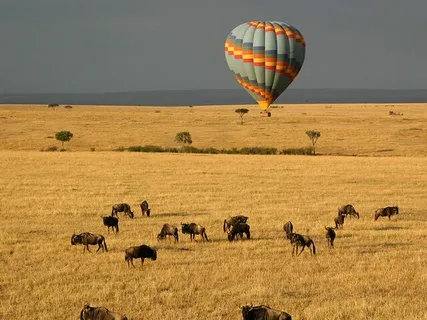
Welcome to the Kenya Africa Tourist Attractions: So I screwed up my first day in Nairobi. Got in the wrong taxi line, ended up paying triple what I should’ve, and my driver this guy named Peter with the biggest smile I’ve ever seen just laughed when I realized. “Welcome to Kenya,” he said, not meanly, just stating facts. Then he bought me mandazi from a street vendor with his own money because “you look hungry and confused.”
That’s how it started.
Three weeks later, I’m sitting on Diani Beach at sunset, feet in the sand, cold Tusker in hand, trying to figure out how to explain Kenya to people back home. And I can’t. There’s no elevator pitch for what this place does to you.
The Masai Mara Kicked My Ass (In the Best Way)
Everyone hypes the Mara. Everyone. Instagram is full of it. I went in skeptical, expecting disappointment because that’s what happens when expectations are sky-high, right?
Wrong.
First morning, our guide Joseph woke us at 5 AM. I hate mornings. Stumbled into the Land Cruiser with instant coffee that tasted like hot dirt, grumpy as hell. Joseph’s talking about lions and I’m barely conscious.
Then the sun came up.
I’ve seen sunrises before. I’m not some shut-in. But this was different. The whole savannah turned gold—and I mean actual gold, not some filtered iPhone nonsense. Acacia trees became silhouettes. The grass glowed. And suddenly there were zebras everywhere, just casually eating breakfast like this was normal.
Joseph stopped the jeep. Pointed. “There.”
A family of elephants crossing maybe thirty feet away. The baby—tiny by elephant standards, still bigger than me—kept tripping over its own trunk. Literally could not figure out how the thing worked. Its mother would stop, wait patiently, then nudge it along when it got up. This happened four times. I’m not ashamed—I teared up watching it.
“Every morning is different,” Joseph said, grinning because he knew he had me hooked.
The next three days were this weird mix of intense excitement and complete boredom. We’d drive for an hour seeing nothing but grass and maybe some gazelles freaking out in the distance. My back hurt. The dust was everywhere—in my hair, my camera bag, my underwear somehow. I was hot, then cold, then hot again.
But then we’d round a corner and there’d be twelve lions sprawled under a tree like fat housecats after Thanksgiving dinner. One opened an eye, looked directly at me with this expression like “yeah, what about it?”, yawned big enough to show off teeth the size of my thumb, and went back to sleep.
Joseph turned around. “The Mara always delivers. You just have to be patient.”
He was right. Always.
The Migration Made Me Understand Nature Better
July through October, the wildebeest migrate north from Tanzania. I’d seen it on documentaries. Thought I got it.
Didn’t get it at all.
We parked near the Mara River around 3 PM. There were already thousands of wildebeest on the bank, just standing there, clearly stressed. You could see them looking at the water, knowing crocodiles were waiting, knowing they had to cross anyway.
They waited. And waited. For over an hour, nothing happened. I ate a granola bar. Checked my phone (no signal). Started to think maybe we’d miss it.
Then one wildebeest—I like to think it was the bravest one, but probably just the dumbest—jumped in. And suddenly everyone went insane. Thousands of them poured into the river, and it turned into this churning mass of bodies and water and panic.
Some made it. Some didn’t. The crocodiles were fast. Nature doesn’t mess around.
I watched for two hours straight. Completely forgot about lunch. Forgot about everything except this ancient survival dance that’s been happening forever and will keep happening long after I’m gone.
That evening back at camp, I couldn’t really talk. Just sat by the fire, processing. Joseph came over, handed me a beer. “People think safaris are just about seeing animals,” he said. “But really, you’re seeing how life actually works.”
Amboseli: Where I Fell in Love With Elephants
After the Mara’s intensity, Amboseli felt quieter. Flatter. Less crowded too, which I appreciated because after a week of safari jeeps everywhere, I was ready for some space.
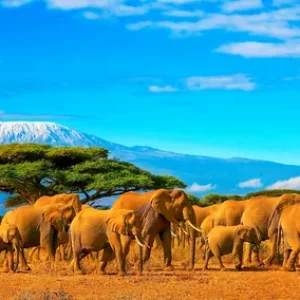
The real show here is Mount Kilimanjaro sitting across the border in Tanzania, just being majestic and snow-capped and perfect. Our guide Sam—different guide, same excellent vibes—positioned us perfectly every time. “The elephants here are photogenic,” he joked. “They know their angles.”
He wasn’t wrong. These elephants are massive, bigger than the Mara ones, and they move like they’re dancing. Watching a herd walk across the plains with Kilimanjaro behind them is almost too pretty. Feels fake even though it’s right there in front of you.
There was this moment—we’d stopped for sundowners (fancy safari term for “drinks while watching sunset”)—and this huge bull elephant started walking toward us. Not aggressive, just walking. Sam didn’t look worried but I was definitely sweating. The elephant got within fifteen feet of our vehicle, stopped, looked at us for what felt like ten minutes but was probably thirty seconds, flapped his ears once like he was waving, and walked past.
“Show off,” Sam muttered, but he was grinning.
Later that night, I could hear elephants near the tent. Just their breathing and footsteps. Should’ve been scary. Wasn’t. Felt safe somehow, like they were just neighbors passing through.
Diani Beach Saved My Sanity
Real talk: After ten days of waking up before dawn, eating dust, and using camp showers that lasted three minutes max, I needed a reset button.
Diani Beach is that button.
The sand is so white it hurts your eyes in midday sun. The Indian Ocean is that turquoise color you assume is Photoshopped, except it’s real and it’s warm and it feels like swimming in bathwater. I stayed at this small guesthouse run by a woman named Fatuma who made coconut curry that I still dream about months later.
Most days I did exactly nothing. Woke up whenever. Swam in the morning because the water was flat and clear. Read a book under a palm tree. Ate prawns for lunch—massive ones, fresh from the ocean, grilled with garlic and lime. Watched traditional dhow boats sail by at sunset while drinking Tusker and feeling like I’d finally figured out how to relax properly.
Fatuma would sit with me sometimes in the evening, telling me stories about growing up in Mombasa, about her grandmother who could predict weather by watching birds, about how tourism has changed the coast but also how some things stay the same.
“You can’t rush the ocean,” she said once. “It does what it wants, when it wants. People should learn from that.”
I tried to get her curry recipe. She laughed. “It’s not about measurements. It’s feeling. You cook with love or you cook with nothing.”
There’s snorkeling if you get restless (I did, eventually). The coral reefs are colorful and I saw a sea turtle who completely ignored me, just munched seagrass like I wasn’t even there. Humbling, honestly.
Lamu Island Made Me Question Modern Life
Lamu has zero cars. None. Just donkeys, dhows, and walking. The streets are so narrow two people can barely pass each other, and getting lost isn’t a possibility—it’s guaranteed.
I got lost every single day. Best part of the trip.
The doors here are famous—massive wooden things carved hundreds of years ago, each one different, each one telling stories. I took probably four hundred door photos, which sounds insane until you see them. They’re art.
The food is proper Swahili cooking. I had coconut fish stew at this tiny place with no name that I only found because I was lost (again) and followed my nose. The owner—never got his name—served it with this chapati so thin and perfect I thought about it for days after.
One afternoon I ended up having tea with an old man named Omar who makes traditional wooden chests. His shop was hidden down an alley, half-workshop, half-museum. He showed me chests his grandfather made, pointed out the different wood types, the joinery techniques passed down for generations.
“Young people want cheap plastic from China,” he said, not bitterly, just stating facts. “But these chests last forever. My great-grandchildren will use the ones I’m making now.”
We sat there for three hours, talking about everything and nothing. The monsoon trade winds. His brother who moved to Dubai. How Lamu has stayed the same for centuries while the world changed around it.
When I finally left, he refused payment for the tea. “You listened,” he said. “That’s enough.”
Lake Nakuru Surprised Me Most
Nakuru wasn’t even on my original plan. Someone at a hostel mentioned it, said the flamingos were “pretty cool,” which is like saying the Grand Canyon is “kinda deep.”
The lake shore is pink. Not pinkish. Pink. Because there are thousands—maybe hundreds of thousands—of flamingos just hanging out. When they take off together, the sound is unreal. This massive honking, flapping cacophony that’s both ridiculous and somehow beautiful.
The park itself is small compared to Mara, but dense. We saw both black and white rhinos within an hour. Rhinos look slow and clumsy until they run, then they’re terrifyingly fast. Our guide—quiet woman named Grace who knew everything about everything—showed us leopard prints near a tree, pointed to some half-eaten impala remains hanging in the branches.
“He was here recently,” she said. “Probably watching us right now.”
Great. Super comforting.
But the viewpoints overlooking the lake are stunning. We climbed to this spot where you could see the whole thing—the pink flamingos, the yellow-barked fever trees, the distant hills. Grace made us tea from a thermos and we just sat there, not talking, watching the world be beautiful.
“This is my favorite park,” she said eventually. “The Mara gets attention, but Nakuru has soul.”
I got what she meant.
Nairobi Isn’t What You Think
Most people rush through Nairobi heading to the parks. I almost did the same. Glad I didn’t.
Nairobi has its own national park bordering the city. You can photograph lions with skyscrapers in the background. It’s surreal. Like watching two worlds collide that shouldn’t work together but somehow do.
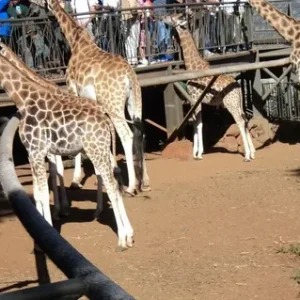
The Giraffe Centre is touristy but worth every shilling. These Rothschild giraffes—endangered, FYI—come right up to the platform. Their tongues are purple-black and stupid long. When they take food pellets from your hand, it’s slobbery and weird and you’ll laugh like a kid.
But what got me about Nairobi was the food scene. I found this place called Mama Oliech’s—famous for fish, been there since the 60s. The tilapia was fried perfect, served with ugali (dense cornmeal stuff) and sukuma wiki (collard greens). Simple food done so well I went back twice. The second time, Mama Oliech herself—must be in her 70s—came over to chat, asked where I was from, told me I looked too skinny and needed more food.
The nightlife is also legit. Westlands area has clubs where young Kenyans are mixing African rhythms with house music and creating something completely new. They will absolutely out-dance you. Don’t even try to compete. Just enjoy.
Mount Kenya Humbled Me Hard
Full disclosure: I’m in decent shape. Run regularly, hike on weekends, thought I’d be fine.
Altitude laughed at my confidence.
Mount Kenya is 5,199 meters. We took the Sirimon-Chogoria route—supposedly one of the prettier ones. Day one was gorgeous. Thick forest with trees covered in moss, everything green and lush and smelling like earth.
Day two we climbed through bamboo forests and into moorlands with these giant groundsels that look like Dr. Seuss plants. Weird, beautiful, alien.
Day three the altitude hit me. Headache. Nausea. Every step felt like walking through mud. Our guide David kept checking on me, making sure I drank enough water, but I could see the concern in his eyes.
Day four at 4,200 meters, David very diplomatically suggested I might want to stop. Pride said keep going. Common sense said listen to the professional.
I stopped. Watched the summit group leave at 2 AM, their headlamps disappearing into darkness. Felt disappointed but also relieved. Spent the morning at camp, drinking tea, watching the sun hit the glaciers above.
David came back down around noon, summit group still climbing. “You made the right call,” he said. “Lots of people push too hard. You listened to your body. That’s wisdom.”
Still felt like failure, honestly. But also, I’d pushed myself further than I thought possible, seen landscapes I didn’t know existed, learned that knowing your limits matters more than proving something.
The views from where I stopped were still incredible. That counts for something.
Real Talk Nobody Shares
The roads are rough. Not “oh this is bumpy” rough. More like “are my kidneys still attached?” rough. Bring medicine if you get carsick.
Power cuts happen randomly. We lost power at camp for six hours one night. No big deal—we had candles, sat around telling stories, went to bed early. Actually kind of nice.
WiFi is terrible outside cities. Embrace it. I stopped checking my phone after three days and it was weirdly freeing.
Tipping is expected. Budget about $10-15 per day for safari guides, less for camp staff. Have small bills. Nobody can break a $100.
The equatorial sun will absolutely wreck you. Even on cloudy days. Sunscreen is non-negotiable.
Kenya runs on Kenyan Shillings but USD works most places. M-Pesa (mobile money) is everywhere—even street vendors use it.
Safari costs vary wildly. I did budget group tours at around $180 per day—shared jeep, basic camps. Not luxury, but who cares? You’re there for animals, not thread count. Mid-range is $300-500. Luxury can hit $1,000+ per day, but that’s not necessary unless you want Instagram-perfect accommodations.
Best time to visit depends on what you want. June-October is dry season—easy animal viewing. But I went in November right after the short rains, and everything was green and gorgeous and way less crowded. Saw plenty of animals. Paid less. No regrets.
March-May (long rains) can be tricky. Some roads become impassable. But bird watching is phenomenal and you might have parks almost to yourself.
Stuff I Wish Someone Told Me
Bring good binoculars. I borrowed some day three and it changed everything. Seeing a leopard is cool. Seeing a leopard’s whiskers and the intensity in its eyes? Different universe.
Pack layers. Morning game drives are freezing. By noon you’re dying of heat. That afternoon it might rain. Layers are everything.
Download offline maps beforehand. Google Maps works offline if you download the area first. Saved me repeatedly.
Learn basic Swahili. Just jambo (hello), asante (thank you), hakuna matata (no worries). Kenyans appreciate the effort. Doors open. Conversations happen. Worth it.
Don’t pack fancy clothes. You need one nice outfit max for lodge dinners. Everything else should be comfortable, neutral colors for safaris, easy to wash.
Bring a headlamp. Camp lighting is minimal and fumbling around in darkness trying to find the bathroom is not fun.
Why Kenya Sticks With You
I’ve been home for four months. Still think about Kenya almost daily.
I’ll be stuck in traffic, stressed about deadlines or bills or whatever, and suddenly I’m back in the Mara at sunrise, watching that baby elephant figure out its trunk, everything quiet except wind in the grass and bird calls.
Or I’ll be eating dinner and remember Fatuma’s curry, or Omar’s stories about monsoon winds, or Joseph laughing when I jumped at a harmless warthog.
Kenya africa tourist attractions aren’t just places you check off lists. They’re experiences that rewire something in you. You come back different. Quieter maybe. More patient. Less impressed by stuff that seemed important before.
I learned things I didn’t know I needed to learn. About patience—wildlife appears when it wants, not on your schedule. About humility—Mount Kenya made sure of that. About connection—Kenyans are some of the warmest, most genuine people I’ve met anywhere.
The Questions Everyone Actually Asks
Is it expensive?
Can be. Doesn’t have to be. Budget travelers manage on $50-80 daily outside safaris. Safaris are the expensive part, but group tours help. Mix budget and mid-range options. Splurge on one nice lodge, do basic camps for the rest.
Is it safe?
Safer than most American cities, honestly. Use common sense—don’t walk alone at night, don’t flash expensive gear, use legit tour companies. Millions visit safely every year.
Will I get sick?
Probably not. I didn’t. Get required shots (yellow fever if coming from certain countries), take malaria pills for coast/low areas, drink bottled water. I ate street food with zero problems, but use judgment.
Do I need a guide?
For safaris, absolutely yes. Self-driving sounds romantic but isn’t practical—you’ll miss everything and possibly die. For cities and beaches, you’re fine solo.
How long should I go?
Minimum two weeks for safaris plus coast. Three weeks is better. I did two and a half and still felt rushed. Don’t try to see everything—pick 3-4 areas and do them properly.
What about solo travel?
Totally doable. I met solo travelers constantly. Join group safaris, stay at social hostels, chat with people. Kenyans are friendly and helpful. You’ll be fine.
My Actual Final Thoughts
If you’re debating whether Kenya is worth the flight, the cost, the vacation days—it is. Completely, entirely, one thousand percent worth it.
But forget what you think you know from documentaries and Instagram. Kenya isn’t going to match your expectations because expectations are too limiting.
It’s going to be harder than you think—the travel is exhausting, roads are brutal, you’ll be uncomfortable sometimes. It’s also going to be easier—people are helpful, things work out, English is widely spoken.
The kenya africa tourist attractions will absolutely blow your mind. But honestly? It’s the unplanned moments you’ll remember. Conversations with guides who become friends. Random kindness from strangers. A sunset nobody planned for that painted the sky impossible colors. Hyenas cackling at night, terrifying and thrilling simultaneously. Fresh passion fruit juice from a roadside stand that tasted like sunshine.
Kenya isn’t perfect. Nowhere is. But it’s real. Deeply, authentically, sometimes brutally real.
And in a world that feels increasingly filtered and performative, that realness matters more than anything.
So book the ticket. Pack the sunscreen and an open mind. Lower your expectations and raise your flexibility. Just go see what happens.
I promise you won’t regret it.
Actually, that’s wrong. You’ll regret exactly one thing: not going sooner and not staying longer.
Karibu Kenya. Welcome home.


Comment (0)